
A clear strategy starts with deciding what your first product needs to do
For medical device and IVD companies, the path to market can become more complicated long before a submission is prepared. Decisions about product features, intended purpose and claims can all affect the regulatory and clinical work that follows.
For Nadia Ragnvald Caspersen, Senior QA/RA Consultant at GBA Key2Compliance, integrating regulatory and clinical considerations into those early decisions is central to helping companies move forward.
Nadia is a trained lead auditor with more than 15 years of experience spanning quality assurance, regulatory compliance, auditing and management systems. With a background in chemical and biotechnical science, she has held roles as a QA Manager and Senior Advisor and joined GBA Key2Compliance in 2023. Her work with medical device manufacturers includes developing and improving quality management systems, conducting internal and supplier audits, and supporting quality management in interim leadership roles.
Make the strategic decisions early
One of the biggest challenges Nadia sees is identifying the full range of requirements that apply to a product and keeping track as they evolve. MDR and IVDR are only part of that picture; depending on the device, additional regulations, standards, cybersecurity requirements and market-specific expectations may also apply.
This is why Nadia advocates establishing a regulatory and clinical strategy before design and development begins. That means considering which markets to enter first, which claims are realistic and what clinical evidence will be needed.
It also means asking whether every planned feature belongs in the first version.
“One lesson I have learned is that perfection does not reach the market.”
An ambitious claim may be commercially attractive, but it requires careful consideration of the evidence needed to support it. Sometimes, a more focused intended purpose and a phased product roadmap offer a smarter path forward.
The point, Nadia emphasises, is to make informed choices that support both compliance and business objectives.
External support still needs internal ownership
Another recurring misconception concerns what companies can hand over to external experts.
“Companies can certainly outsource specific activities and bring in external expertise, but they cannot outsource responsibility.”
In Nadia’s view, consultants can advise, guide, train and support informed decisions. Maintaining compliance also requires management commitment, appropriate resources and ongoing oversight within the manufacturer’s organisation.
The same practical thinking applies to quality management systems (QMS). For Nadia, a QMS should describe how a particular company operates and give employees clear guidance. Copied templates or AI-generated procedures alone cannot fulfil that purpose. The system also needs to evolve as the company grows.
AI needs knowledgeable people behind it
Looking ahead, Nadia sees considerable potential for AI to help with increasing regulatory complexity and documentation demands.
That optimism comes with an emphasis on understanding the output. Watching her teenage daughter’s generation use AI has highlighted how convincing an answer can look even when the understanding behind it is incomplete. Nadia is beginning to see similar tendencies in the medical device industry.
AI can support drafting and summarising, but Nadia believes experienced professionals remain essential for interpreting requirements, assessing risks and making decisions in context.
She therefore encourages organisations to invest in understanding AI’s capabilities and limitations, while maintaining the expertise to challenge and verify its output.
Keeping the patient in mind
The combination of science, problem-solving, quality and business originally drew Nadia to QA and RA. Consulting offered the opportunity to explore different technologies, learn from other organisations and find practical approaches to shared challenges.
The motivation behind that work remains personal.
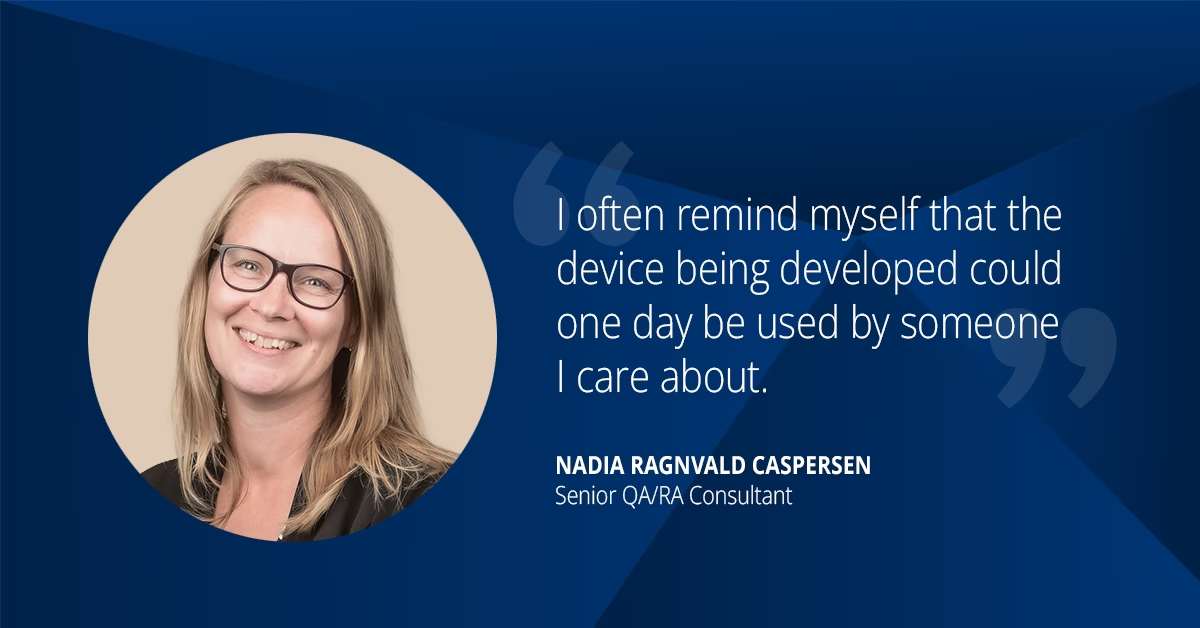
“I often remind myself that the device being developed could one day be used by someone I care about.”
That perspective connects Nadia’s advice on strategy, ownership and informed decision-making: integrate quality, regulatory, clinical and business considerations from the beginning, make deliberate choices about what comes first, and keep the people who will rely on the product in mind.
Facing a QA or regulatory challenge?
At GBA Key2Compliance, our consultants combine regulatory expertise with practical industry experience to support medical device and IVD companies throughout the product lifecycle.